Increasing Art Gallery Satisfaction
GalleryPal
Self-paced museum tours that slow you down in front of the art that deserves it.
Overview
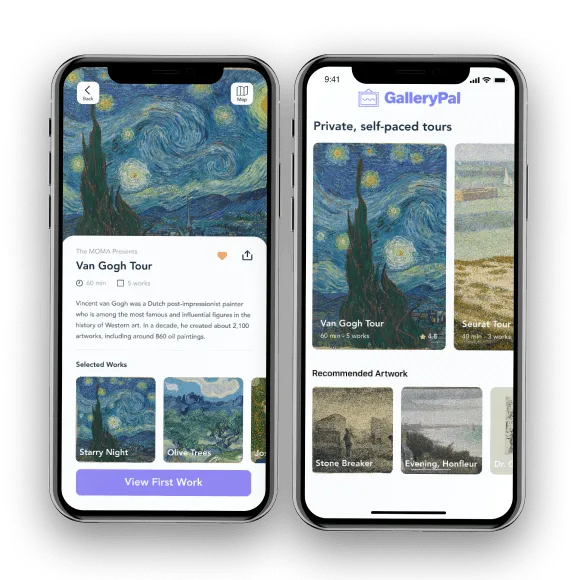
Built in a one-week design sprint, GalleryPal is an iOS app for self-paced, self-guided art tours.
The problem. Museum-goers face a plethora of decisions that start before they even enter the museum. Chief among them: what should I see today, how do I get there, and how do I learn more?
The outcome. I designed a mobile app that lets museum-goers experience art at their own pace and read historical context in the moment.
Deliverables
- User and market research
- Product ideation
- Sketches
- Storyboard
- UI mockups
- Prototype
- User testing
Beauty is in the eye of the beholder, and art is open to interpretation. It is no wonder visitors crowd around a small placard, unsure what the artist meant when they made a piece.
The Challenge
Many art visitors, like Angela, wish their gallery viewing experience was not so confusing.
Angela is an art director who just moved to New York City. The Museum of Modern Art is her favorite museum. She is standing in front of Van Gogh’s Starry Night, wondering what it means.

Goals. While looking at the art, Angela wants quick information that gives her a better appreciation for a piece and makes her feel like she is getting the most out of her visit.
Behavior. She visits popular New York museums every couple of months, usually alone. She rarely looks for a specific exhibition or artist; she browses whatever is being shown.
Frustrations. She enjoys her visits, but feels that if she knew a little more, she would enjoy them more. She has tried books and articles about the art she has seen, but loses interest in how long and in-depth they are.
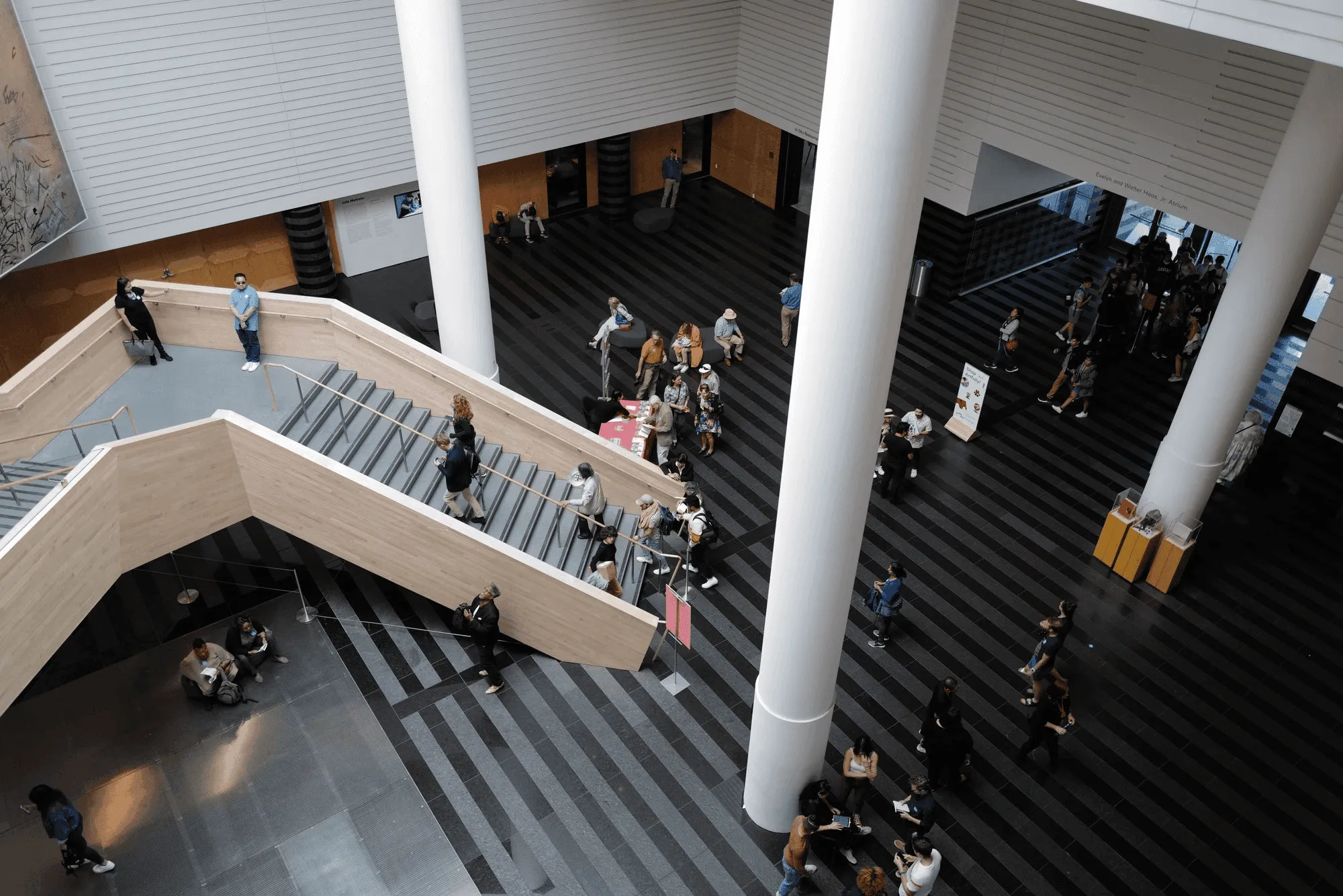
An afternoon at the MoMA leaves Angela with more questions than answers.
The Research
I recruited people like Angela and paired the interviews with online research. The same questions surfaced again and again:
- What should I see today, with the little time I have?
- Where are the restrooms?
- What else should I know about the piece in front of me?
- How does it relate to the artist and the time it was made?
When I finally arrive at the museum, I have a hard time deciding what to see. I only have a couple of hours each time I visit.
So many times I find myself asking how the artist did that. I would love to know more about their process and technique.
The Discovery
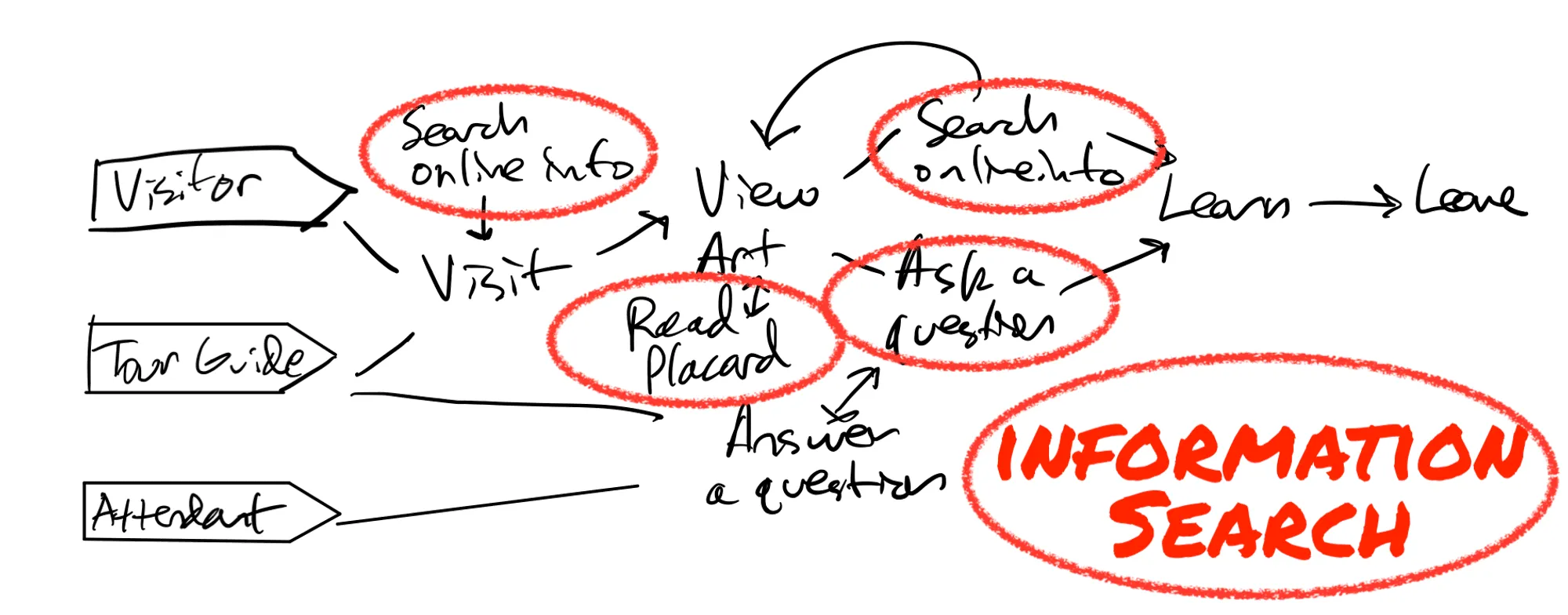
I mapped the whole visit, from the front steps to the exit. The friction was not getting to the museum or moving through it. Again and again, it was the search for information about the art itself.
The Ideation
How might we give visitors the information they need, right when they need it?
Every existing option fell short. Guided tours move at the group’s pace, audio guides are clunky shared hardware, museum staff are helpful but rarely free, and printed maps or web searches pull you out of the moment.
I do not really enjoy group tours because I like to do my own thing, but sometimes I listen in to learn a few facts about the artist or the piece.
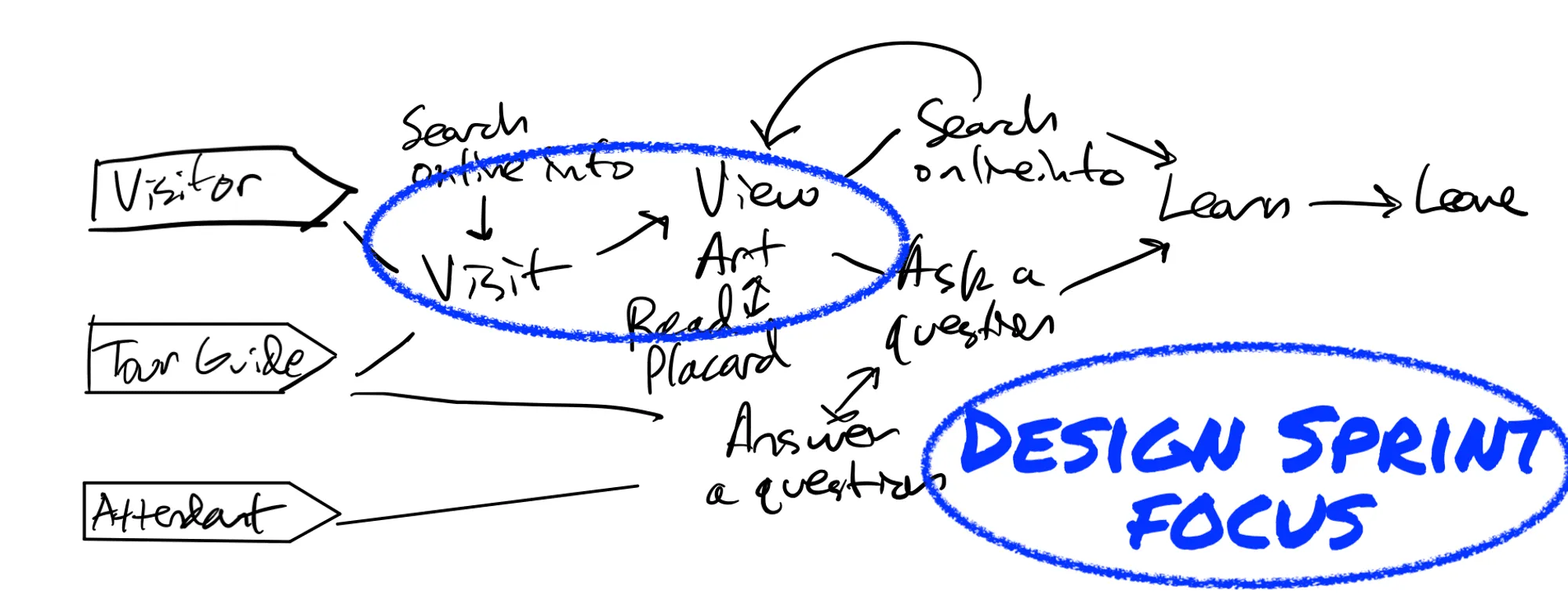
To keep a one-week sprint tractable, I narrowed the focus to the moment that matters most: standing in front of the art.
The Vision
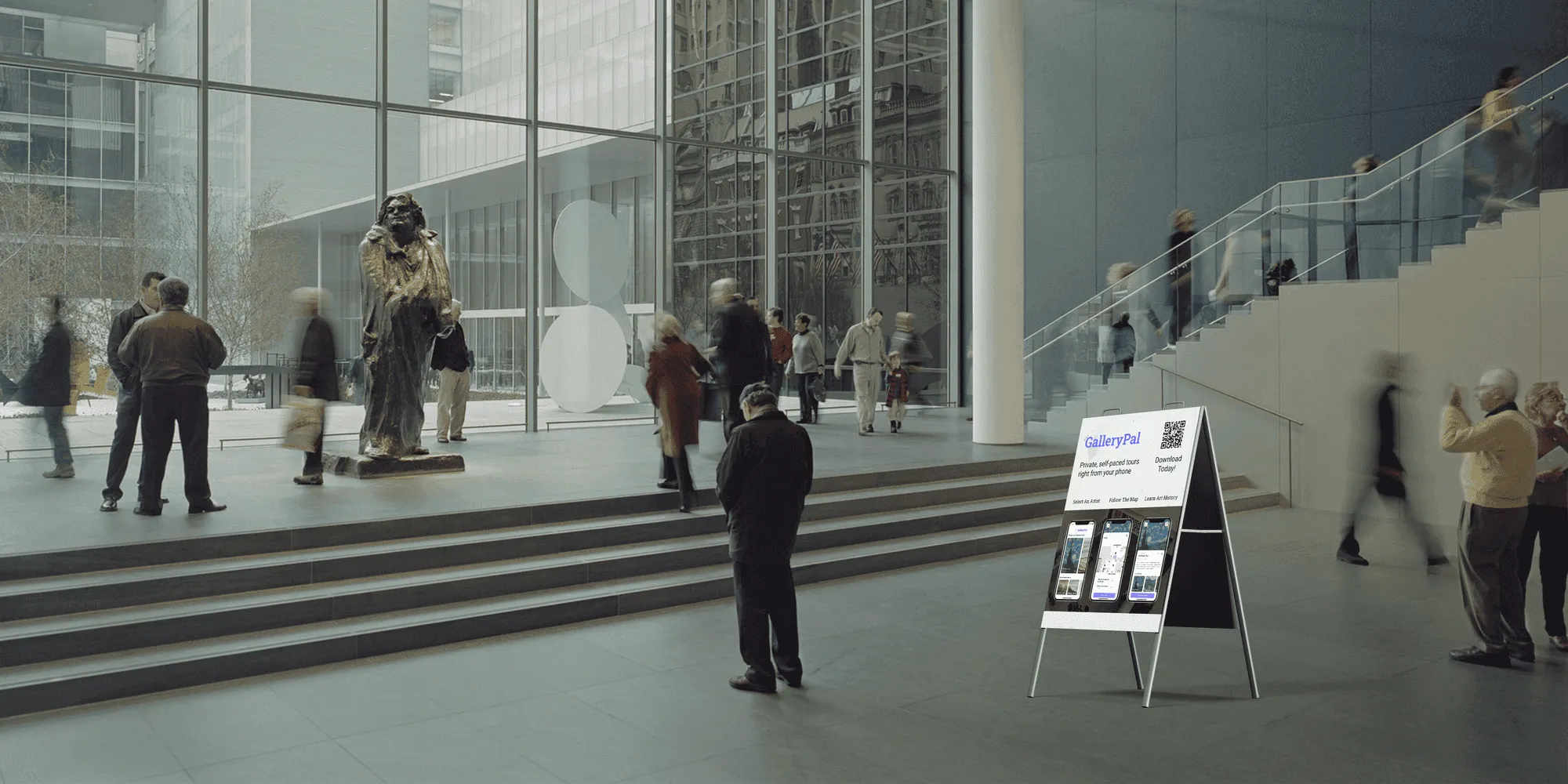
Angela’s new experience starts in the lobby.
Running low on time and preferring to walk the galleries alone, she sees the GalleryPal sign, scans the QR code, and downloads the app.
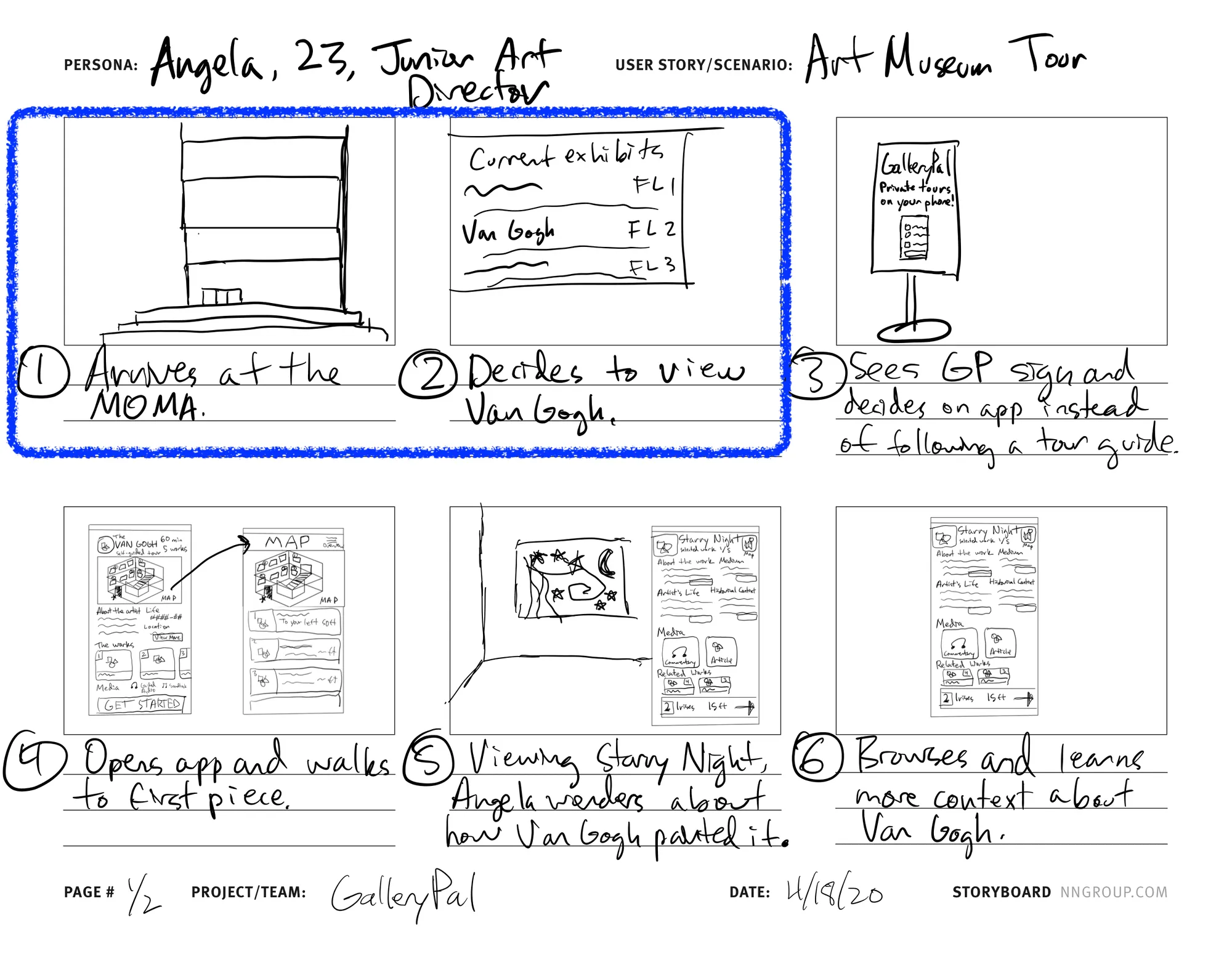
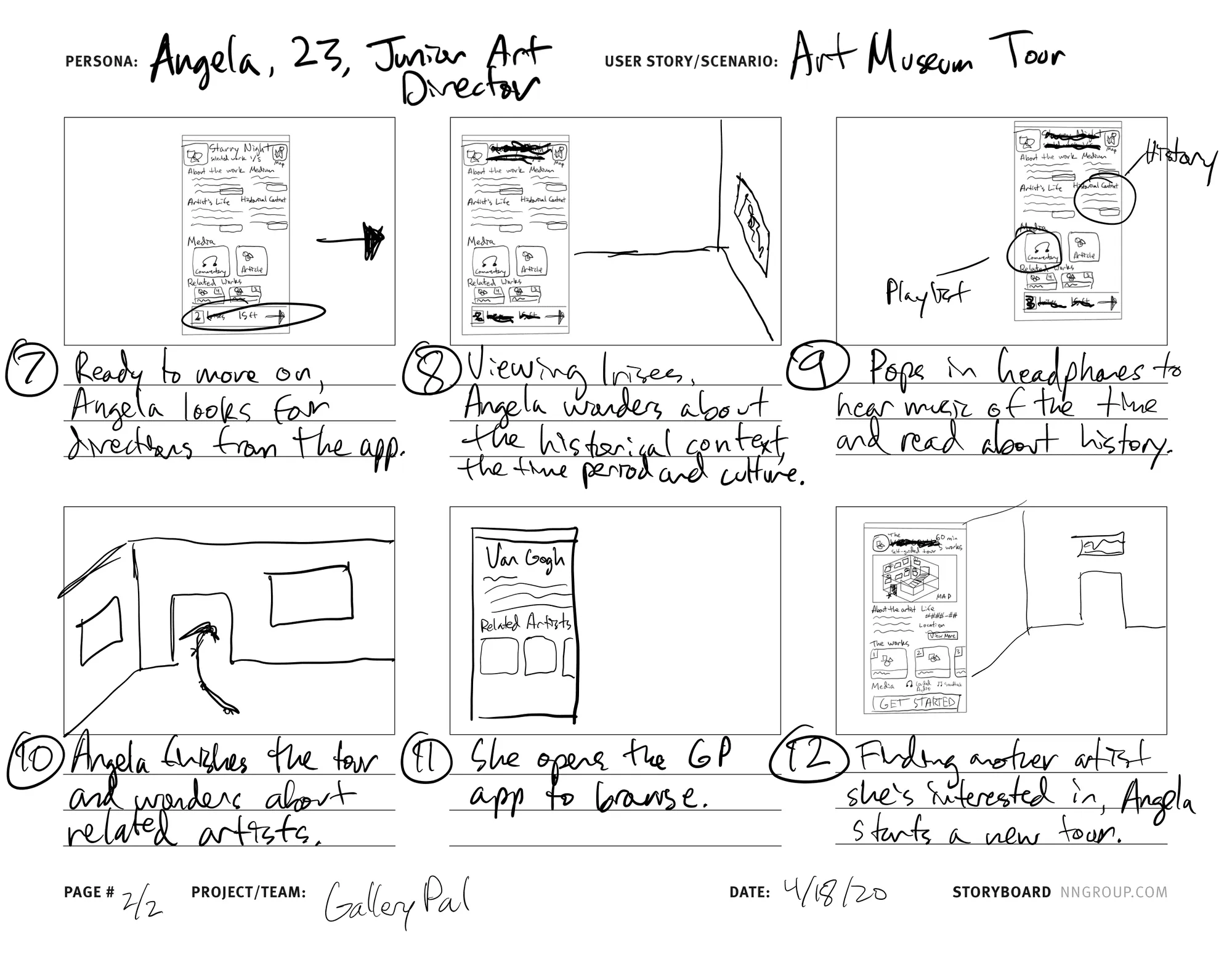
I storyboarded the full visit so the sprint stayed anchored to Angela’s real journey, from the front steps to a second tour.
The Design
I started by sketching the critical screen for the in-museum experience.
Limited sprint time forced quick decisions. I studied tour and content apps that use uncluttered interfaces to guide people, then sketched the core screens fast.
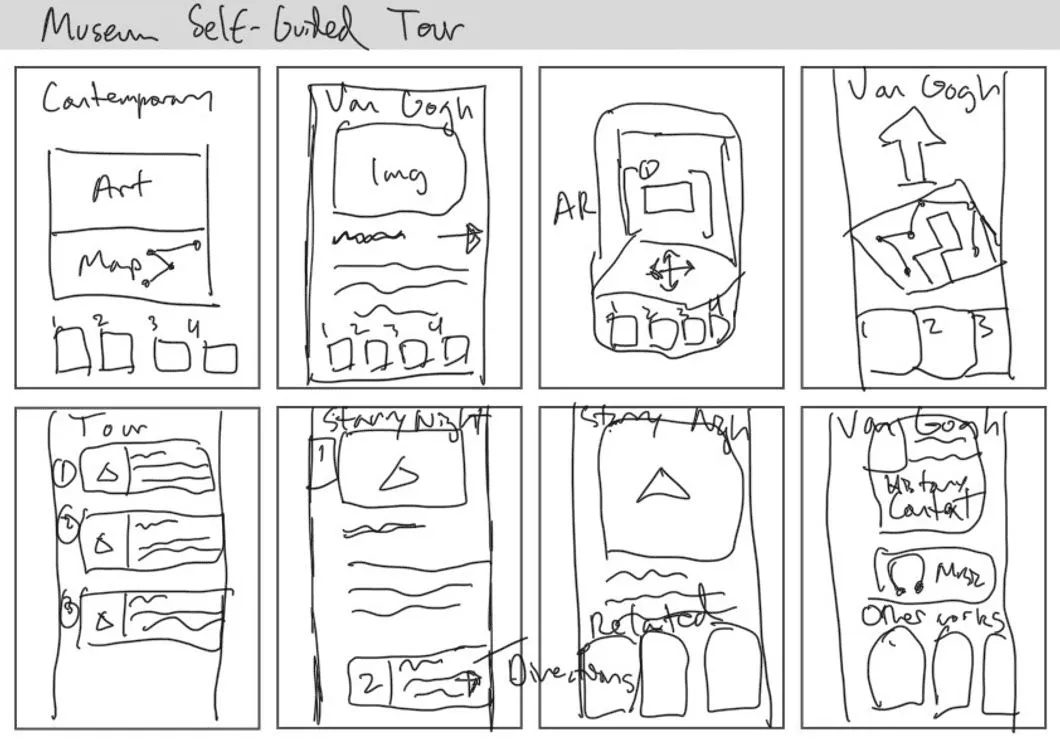
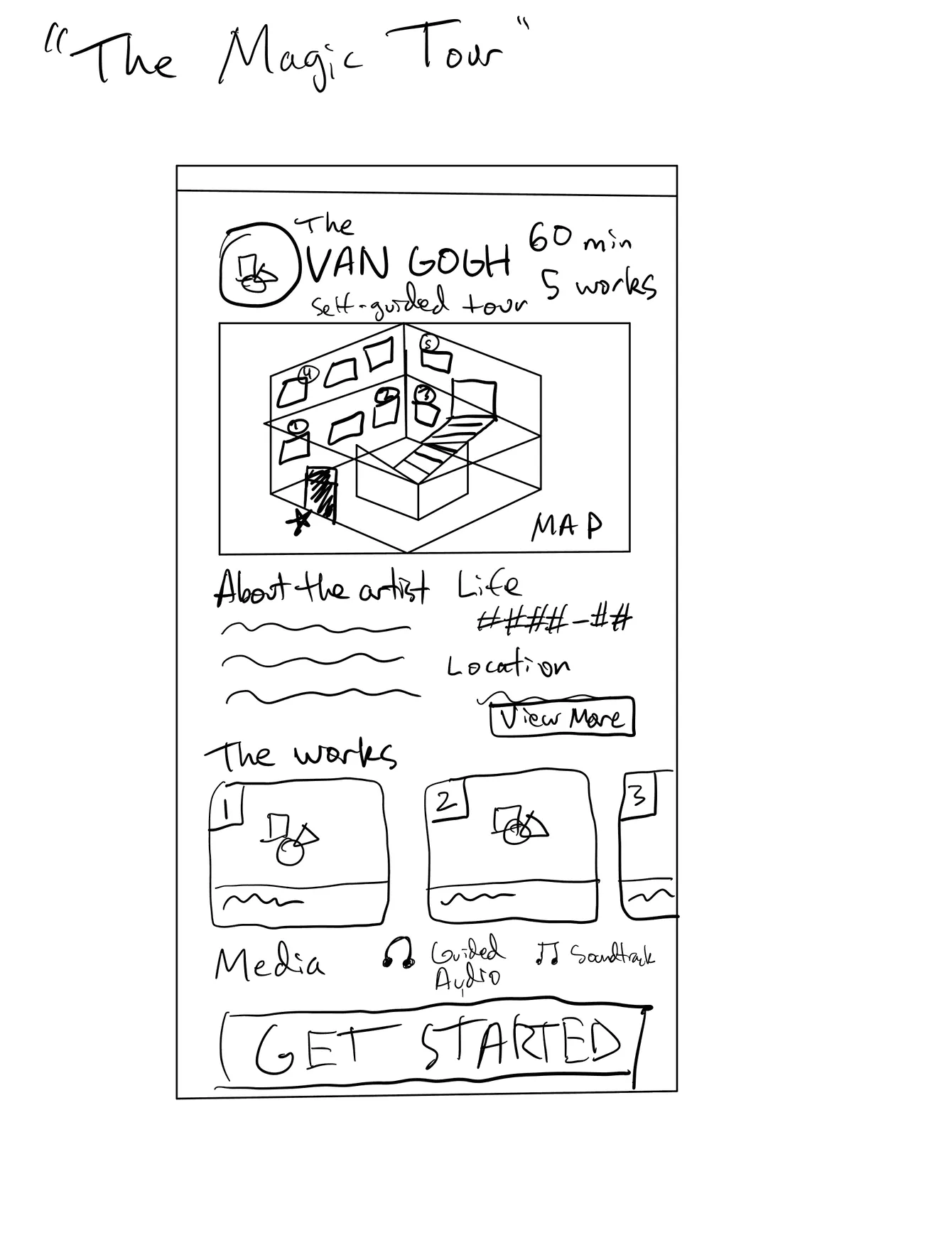
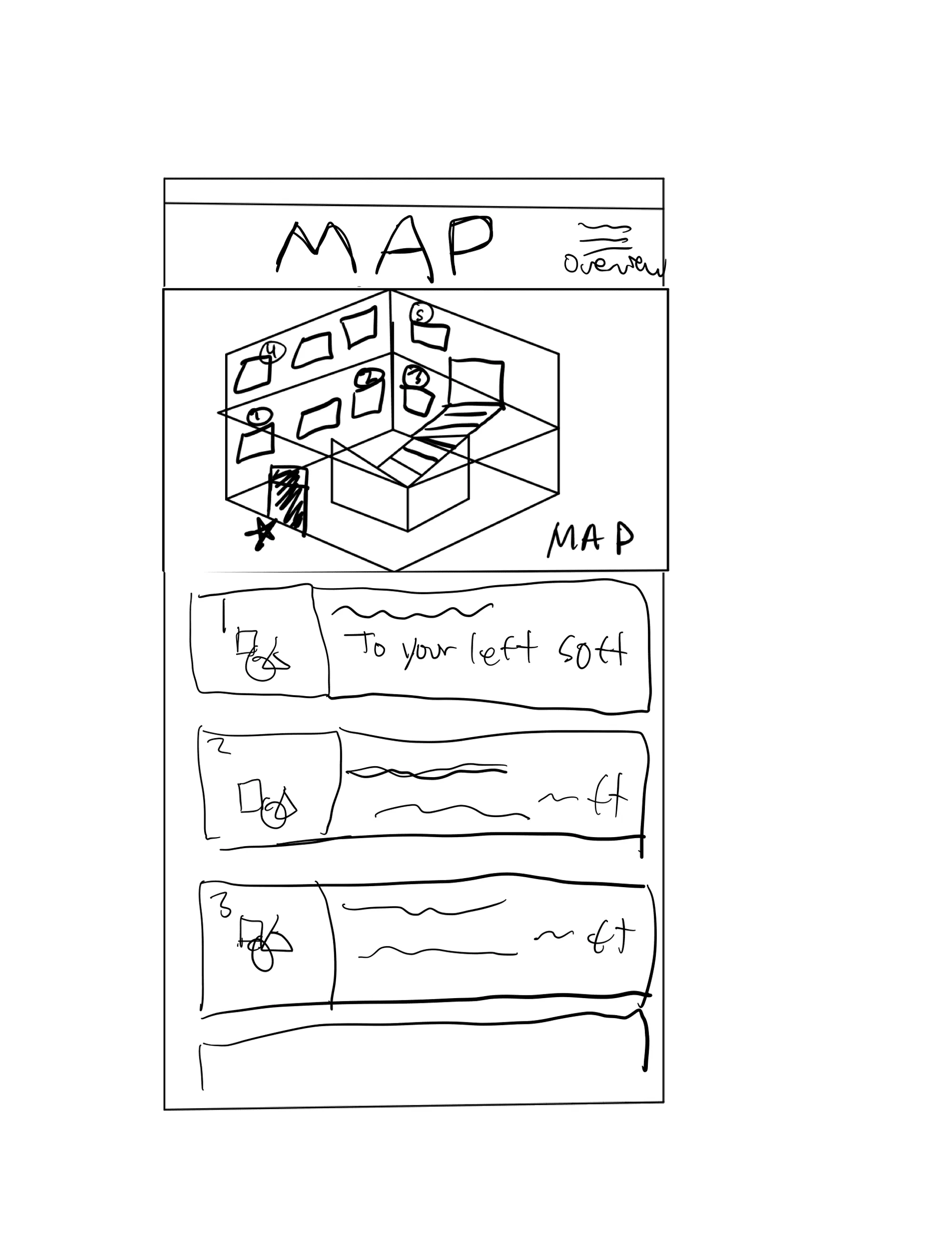
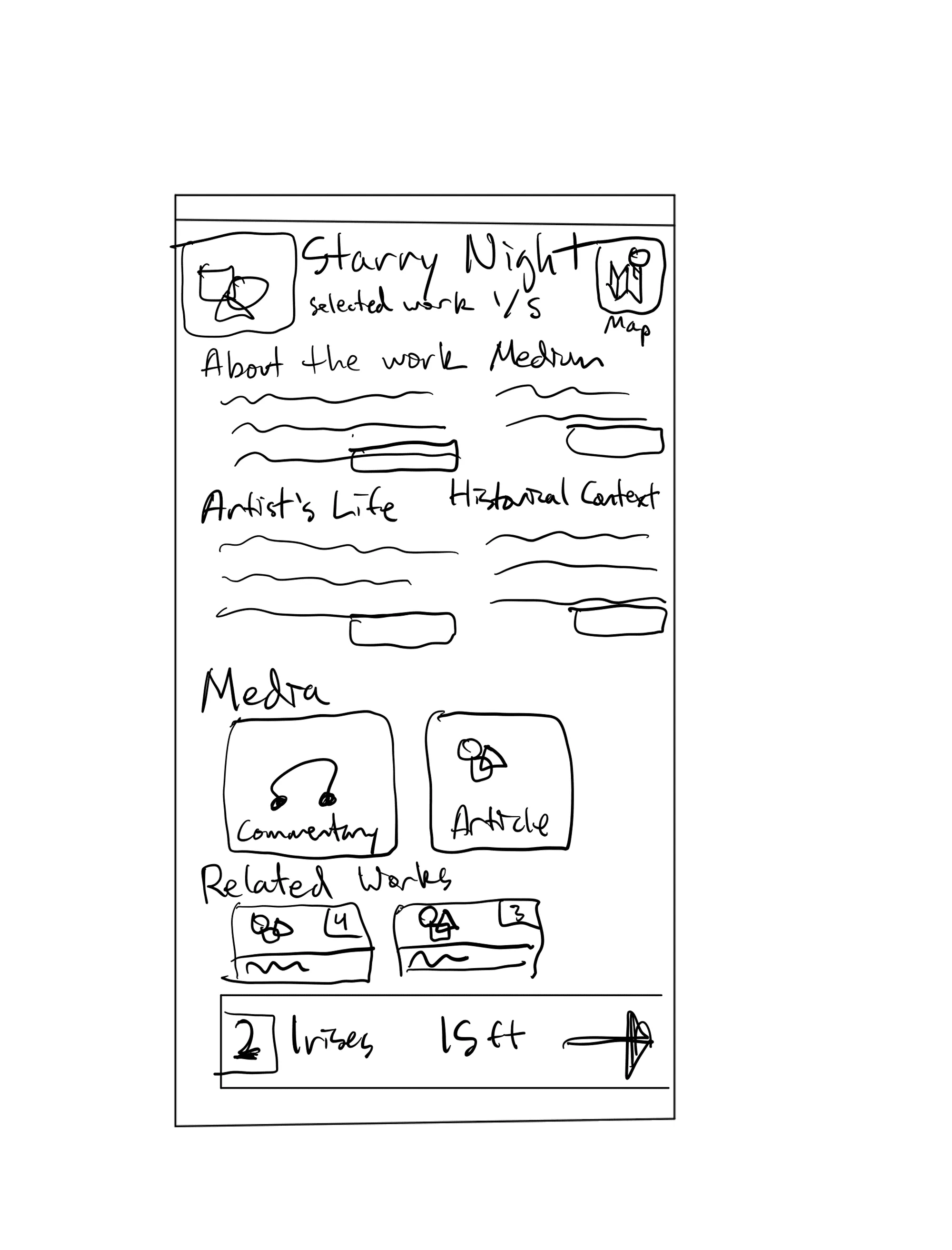
Together, these screens keep Angela’s attention on the art rather than on figuring out what to see next.
The Solution
A self-paced, app-guided tour for art-goers.
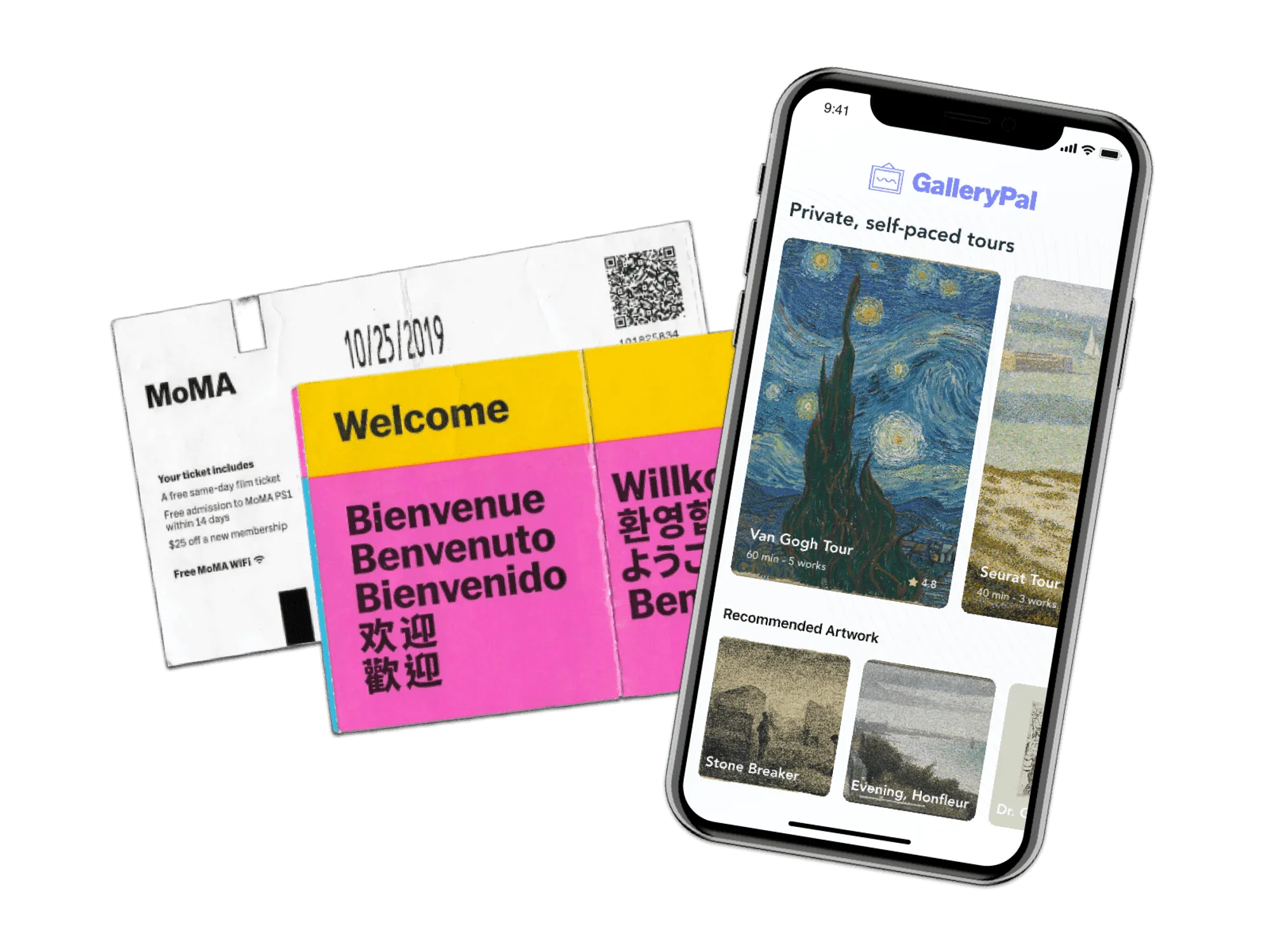
When Angela reaches Van Gogh’s Starry Night, her focus stays on the art.
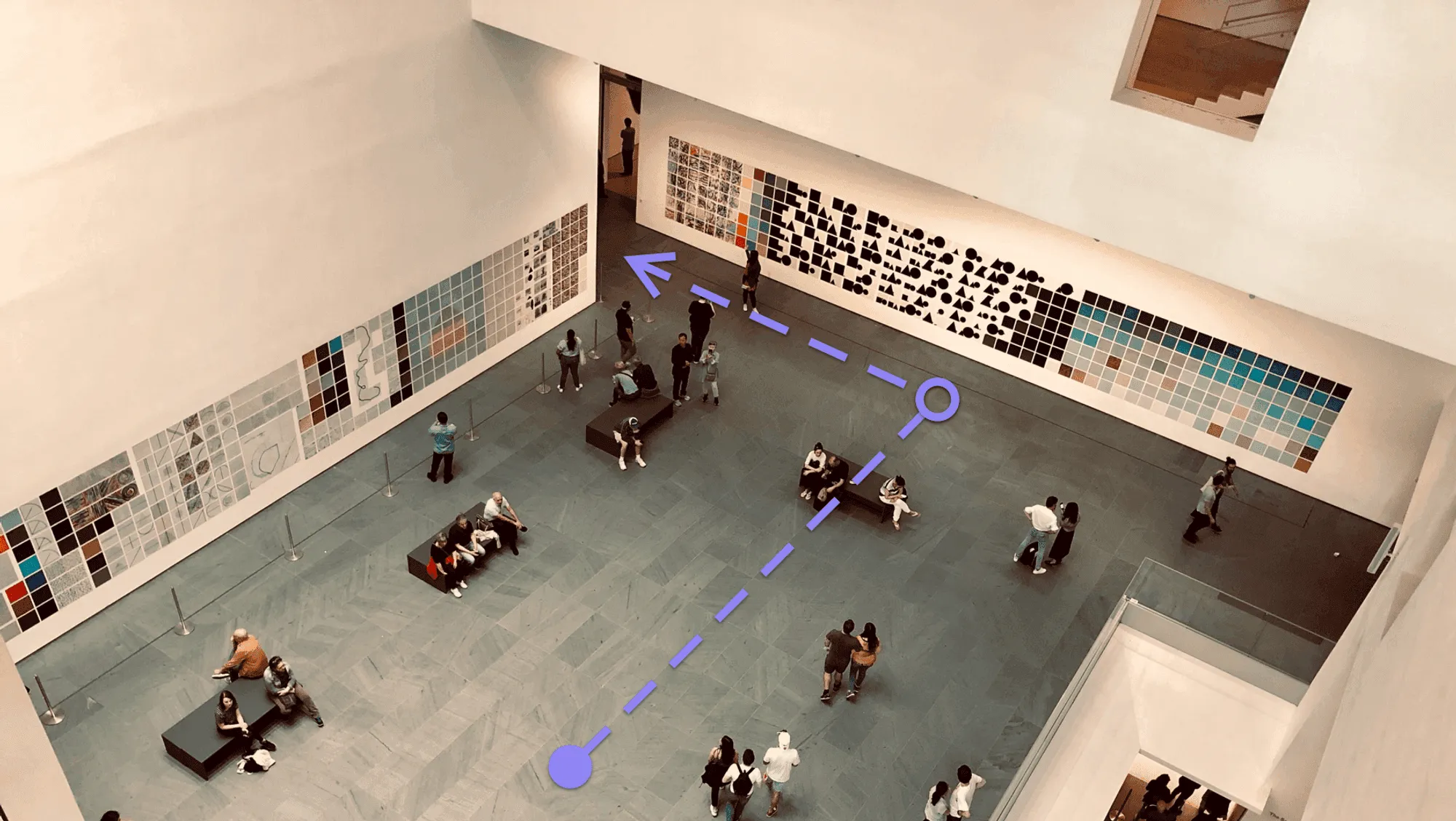
Find your location and where to go next
A live map shows Angela where she stands in relation to the work she wants to see, so she never gets lost in the museum.
I like having this map show my location in relation to the artwork to see next.
View relevant art information and audio
At each piece, Angela reads about the work and the artist and listens to commentary, becoming immersed in the artist’s life.
When you walk around these museums, part of the reason you are there is trying to understand another perspective and history.
I really liked the idea of the commentary, providing additional context to the art.
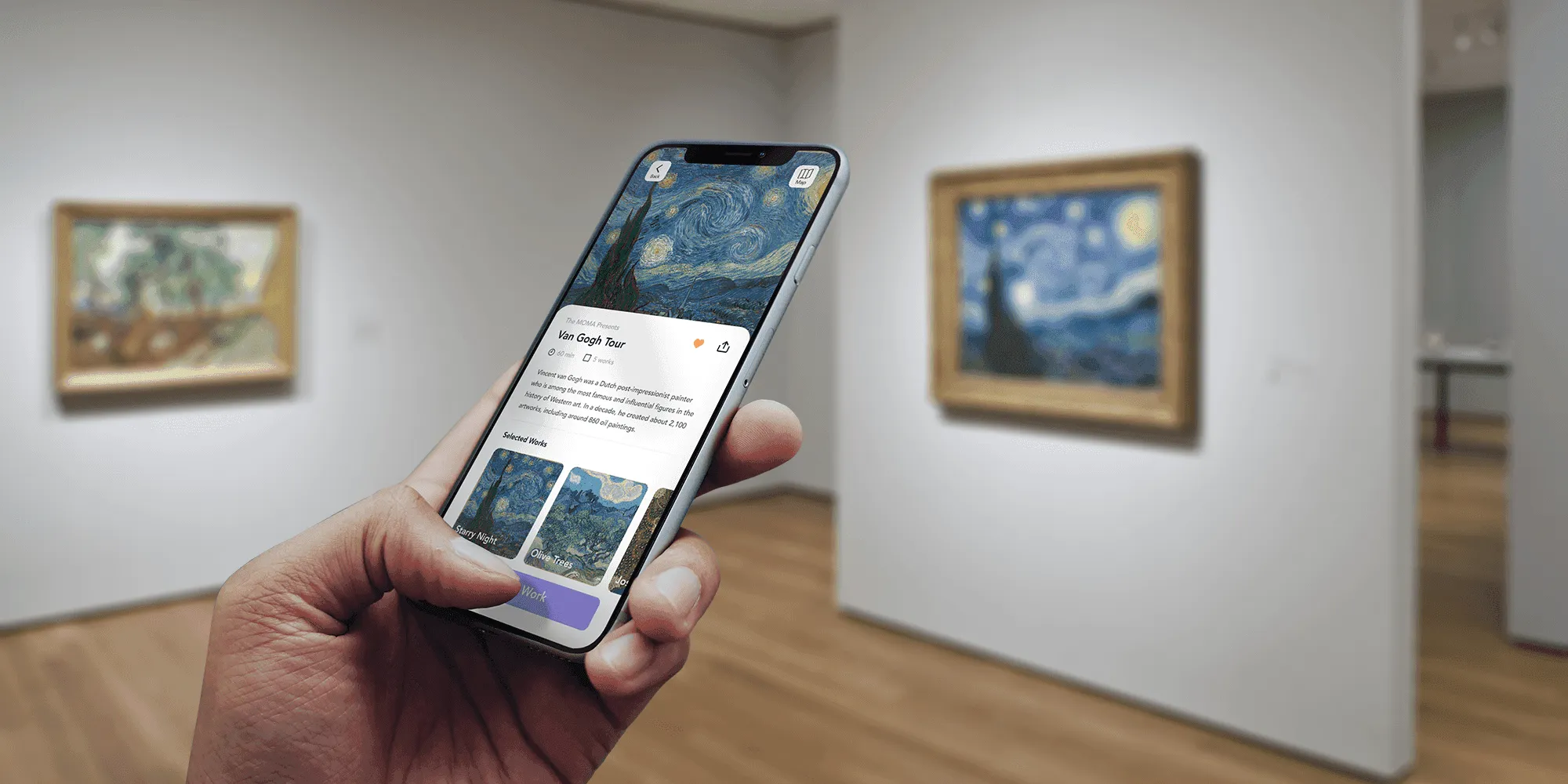
Angela’s new experience now meets her where she is:
- Quick information while she looks at the art
- The feeling that she is making the most of her visit
- A greater appreciation for the work in front of her
The Takeaways
What I learned from designing a guide for art-goers.
Form a simple hypothesis
By focusing on the experience while physically at the museum, I could design a prototype that met real visitor needs inside one week.
Borrow from outside the category
Apps such as tour guides and Airbnb helped me narrow the design focus and keep screens simple.
Design for single-task motivation
Limited attention spans push people out of apps entirely. Simple design and a clear information hierarchy were key to keeping visitors from feeling overwhelmed.
The Future
In a single week, GalleryPal came together around one idea: meet visitors in front of the art and give them just enough context to see more in it. From here I would sharpen the in-gallery map and the micro-interactions that carry Angela from one piece to the next, then put the self-paced tour in front of real visitors in a real museum to learn where it earns its place.